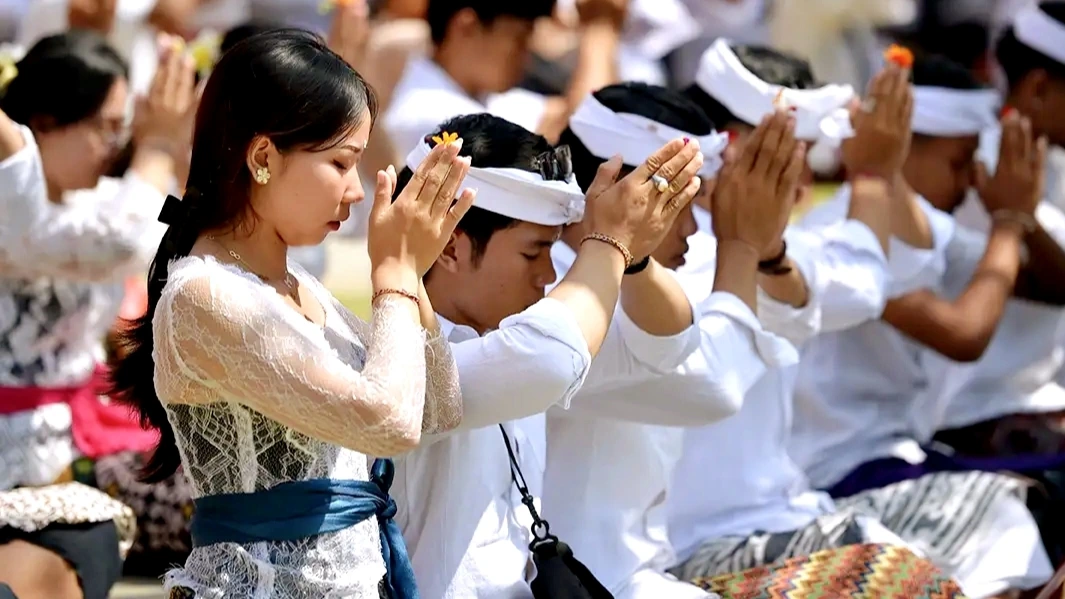

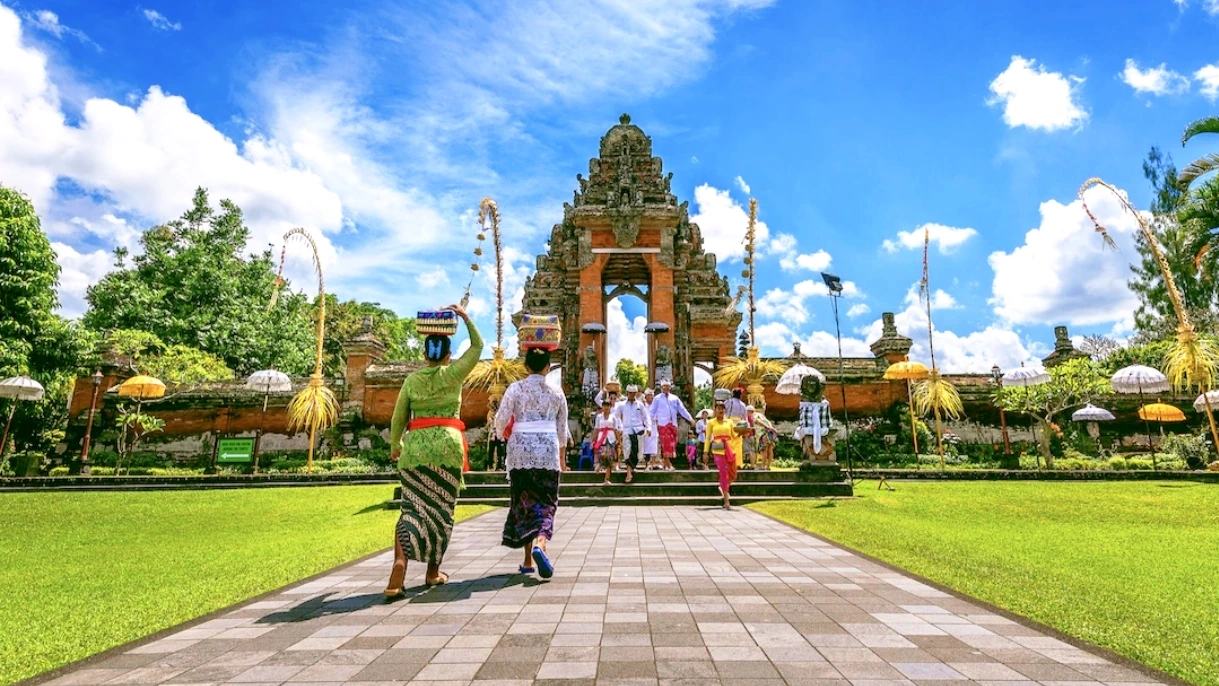
Bali is often seen as a tropical escape, a place of beaches, temples, and beautiful landscapes. For many visitors, it is simply a destination to relax and experience something different.
But what most people see is only the surface.
What most people call “culture” in Bali is often limited to what is visible temples, ceremonies, and traditional performances. Yet behind these visible elements lies a deeper system that shapes everyday life.
Bali operates on a way of living that is deeply rooted in philosophy, spirituality, and community. Small offerings on the streets, frequent ceremonies, and temples in almost every corner are not random traditions. They are structured expressions of a system that has been practiced for generations.
Balinese culture is not something performed for visitors. It is not an occasional celebration. It is a living system, one that shapes how people think, act, and interact every single day.
To understand Bali beyond its surface, you need to see it not just as a destination, but as a culture that is continuously lived.
What is Balinese Culture?
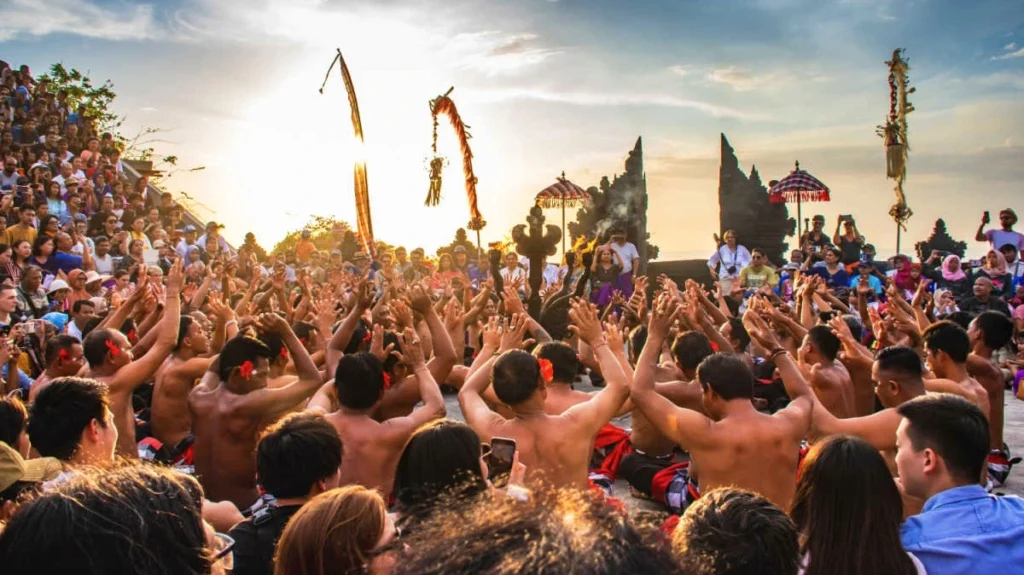
Balinese culture is often described as a blend of religion, tradition, and art. While this is accurate, it only captures part of the picture.
At its core, Balinese culture is an integrated system of life, where religion, philosophy, rituals, and community are not separate elements, but deeply interconnected. Each aspect supports the other, creating a structure that guides how people live and how meaning is formed.
It is not a collection of traditions. It is a system.
Unlike in many parts of the world where culture may appear in occasional events or preserved customs, in Bali it is lived continuously. Daily activities, social interactions, and even spatial arrangements are shaped by cultural and spiritual principles.
Understanding Balinese culture requires more than observing what is visible. It requires recognizing the system behind it, one that is practiced daily, often in subtle but deeply meaningful ways.
The Foundation: Balinese Hinduism
At the foundation of Balinese culture lies a unique form of Hinduism that shapes nearly every aspect of life on the island.
While it shares roots with Hindu traditions from India, Balinese Hinduism has evolved by integrating local beliefs, ancestral worship, and a strong emphasis on harmony and balance. It is less focused on doctrine and more on lived practice.
In many places, religion fits into life. In Bali, life fits into religion.
Religion is not confined to temples or specific moments of worship. It exists in homes, on sidewalks, in workplaces, and in daily routines. Small offerings placed each morning, regular prayers, and ceremonies throughout the year are all part of maintaining balance between humans, nature, and the divine.
This continuous presence of spirituality is what gives Balinese culture its distinct character. Religion is not separate from life, it is the structure that sustains it.
The Core Philosophy: Tri Hita Karana
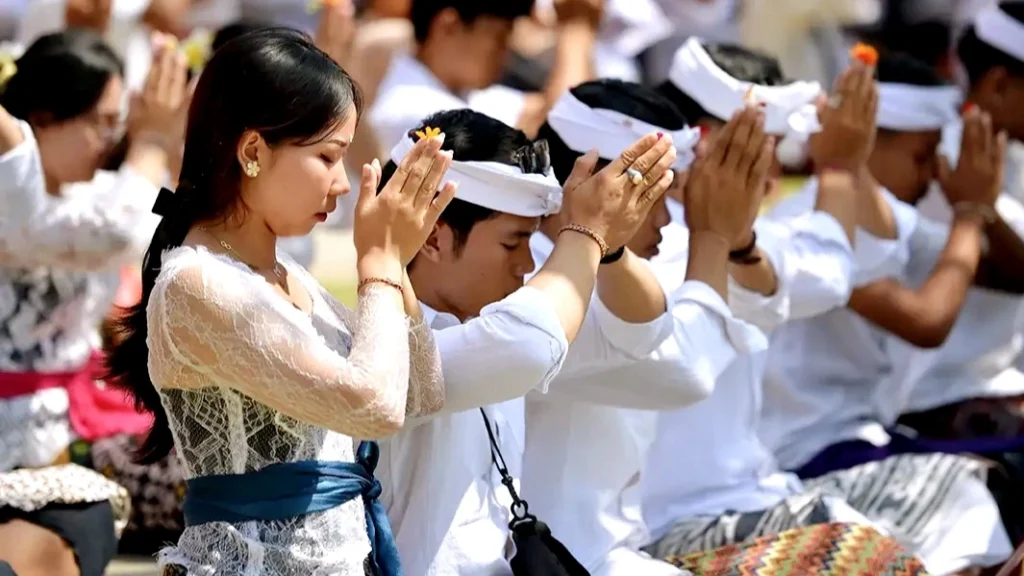
To truly understand Balinese culture, it is essential to understand the philosophy that underlies it: Tri Hita Karana.
This concept can be translated as “three causes of well-being,” referring to the three essential relationships that must be kept in balance, between humans and the divine, among people, and between humans and nature.
Rather than being an abstract idea, Tri Hita Karana is applied in everyday life. It shapes behavior, social structure, and the way space is organized.
At its core, this philosophy is expressed through three interconnected elements:
- Harmony Between Humans and the Divine
This relationship is maintained through daily prayers, offerings, and temple ceremonies. Temples are found in homes, villages, and public spaces across Bali, serving as points of connection between the physical and spiritual worlds. Daily offerings such as Canang Sari are small but consistent acts of gratitude, reminders that balance with the divine must be maintained continuously. - Harmony Among People
The second element focuses on relationships within the community. Balinese society emphasizes social harmony, mutual support, and shared responsibilities. Community life is structured, often centered around the banjar system, where participation is expected. Cooperation is not optional, it is part of maintaining balance. - Harmony Between Humans and Nature
The third relationship emphasizes balance with the natural environment. Nature is not viewed as separate from human life, but as an integral part of it. Mountains, rivers, and the sea carry spiritual significance, and maintaining their balance is essential. This perspective reinforces the understanding that humans exist within a larger system that must be respected, not controlled.
Together, these three relationships form the foundation of life in Bali. Balance is not an idea, it is a daily practice.
Rituals and Ceremonies: A Continuous Expression
For many visitors, rituals and ceremonies are among the most visible aspects of Balinese culture. Processions, offerings, and temple events often leave a strong impression.
However, they are often misunderstood.
In Bali, rituals and ceremonies are not occasional events created for special moments. They are part of a continuous cycle, a way of maintaining balance, expressing gratitude, and fulfilling spiritual responsibilities.
Some rituals take place daily, such as the preparation of offerings placed in homes, streets, and entrances. Others occur on specific dates, marking important religious and life-cycle events.
What may seem repetitive is actually intentional consistency.
For the Balinese, these ceremonies are not interruptions to daily life, they are part of its rhythm. Understanding this shifts perspective. Instead of seeing ceremonies as cultural attractions, they become expressions of a system that is continuously practiced.
Daily Life: Where Culture Becomes Visible
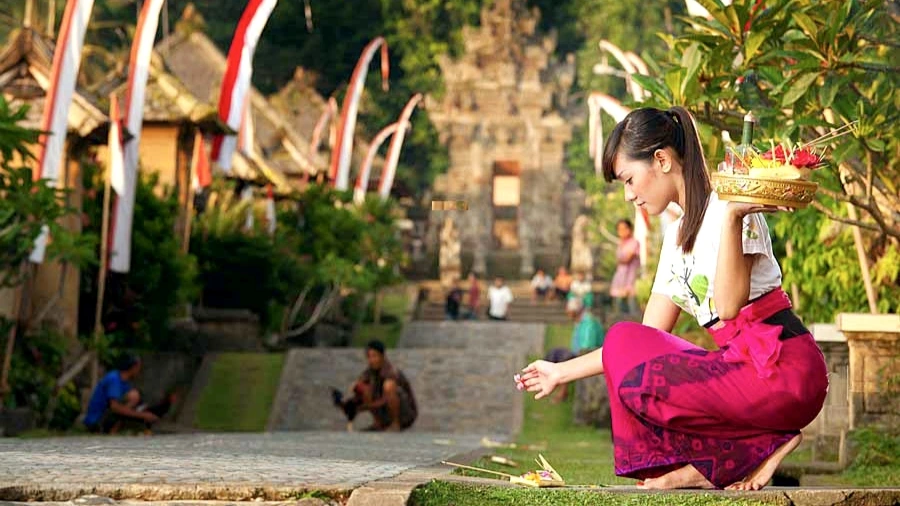
While philosophy and rituals form the foundation, it is in daily life that Balinese culture becomes most visible.
Cultural expression appears in everyday routines, in the way people begin their day, organize their homes, and interact with their surroundings.
Small offerings placed on sidewalks and in front of shops each morning, the presence of family temples within residential compounds, and regular moments of prayer all reflect a culture that is continuously practiced.
Even traditional house layouts follow spiritual and cultural principles, where each space has a defined meaning and purpose.
What makes this unique is consistency. These practices are not performed occasionally or for display, they are repeated daily, becoming a natural part of life.
For visitors, this means that culture in Bali is not something you need to search for. It is already present, often in quiet and subtle ways that become meaningful once understood.
The Role of Community: The Banjar System
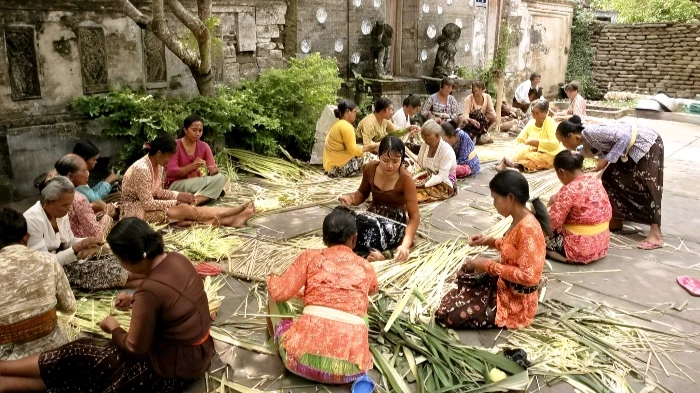
Balinese culture is not only shaped by philosophy and daily practices, but also by a strong sense of community.
At the center of this structure is the banjar, a traditional community organization that plays a central role in everyday life.
Each village is divided into banjar units, where members actively participate in organizing ceremonies, managing social activities, and supporting one another.
The banjar functions as a system of shared responsibility. From preparing ceremonies to assisting during life events, community members work together as part of a collective network.
Individual identity is shaped through community participation.
This reflects a key aspect of Balinese culture: life is not experienced individually, but collectively. Many of the cultural activities seen in Bali are made possible through this strong and organized community structure.
Art, Offerings, and Cultural Expression
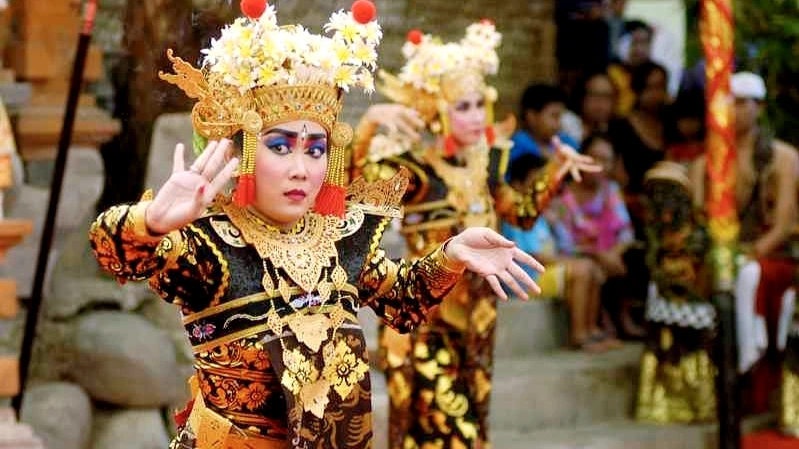
Art in Bali is not separate from daily life or spiritual practice. It is deeply integrated into both.
Dance, sculpture, music, and offerings are not created solely for entertainment or aesthetics. They are part of a larger system of meaning, often connected to rituals and religious expression.
In Bali, art is not created for expression alone, it is created as an offering.
This is especially visible in daily offerings, where flowers, leaves, and symbolic elements are carefully arranged. These acts combine creativity, intention, and devotion.
As a result, artistic expression in Bali is not confined to galleries or performances. It exists in everyday life, embedded within the cultural and spiritual system.
Why Understanding Balinese Culture Matters for Travelers
Understanding Balinese culture changes the way Bali is experienced.
Without understanding, you only see Bali. With understanding, you begin to experience it.
It allows travelers to move beyond surface-level attractions and develop a deeper appreciation for what they encounter. It also helps in respecting local practices, navigating social norms, and avoiding unintentional misunderstandings.
More importantly, it transforms travel from passive observation into meaningful experience.
The more you understand the culture, the more you begin to see Bali not just as a destination, but as a living system that you are temporarily part of.
Common Misconceptions About Balinese Culture
Many first-time visitors misunderstand Bali in ways they do not immediately realize.
- Bali is only about temples
- Ceremonies are performed for tourists
- Offerings are simply decorative
- Balinese culture is static and unchanging
In reality, Balinese culture is dynamic, deeply rooted, and continuously practiced. What may appear simple often carries deeper meaning within a structured system of belief and practice.
Understanding a Living Culture
Balinese culture cannot be fully understood by observation alone.
It is not just what you see temples, ceremonies, or offerings but the system of thought that gives meaning to them.
To truly experience Bali, you need to look beyond the surface and begin to understand how this culture lives and is practiced every day.
Because Bali is not just a place you visit, it is a way of life you begin to understand.