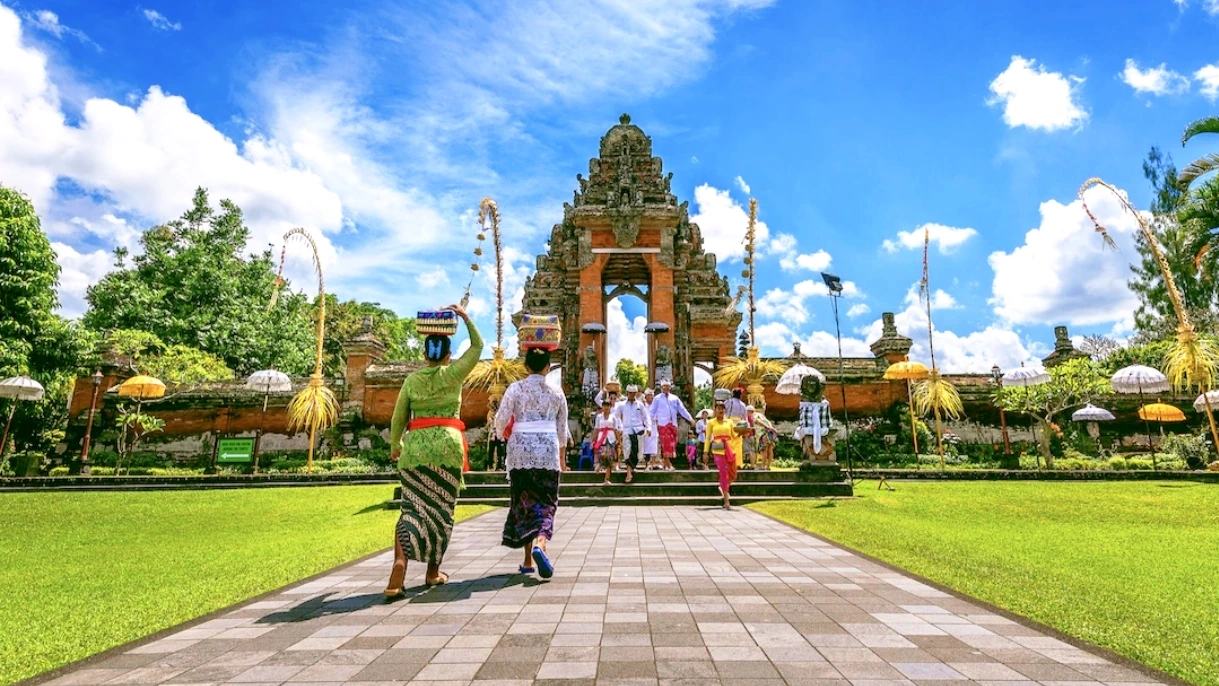

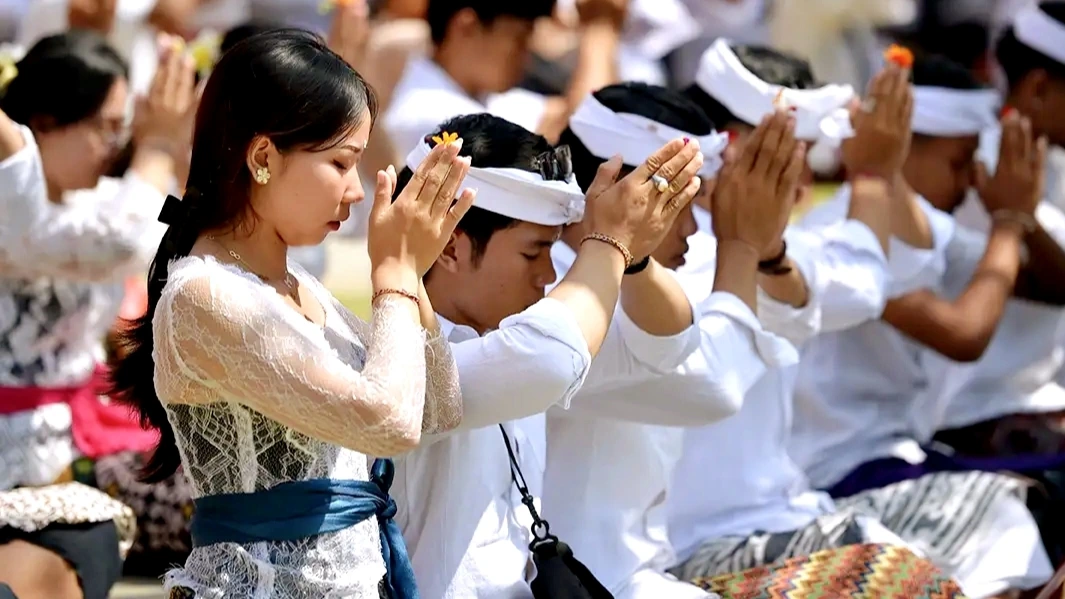
For many people, their first impression of Bali feels almost magical. Temples stand on nearly every corner, the scent of incense lingers in the air, and small offerings are carefully placed on the ground, in front of shops, and even on car dashboards.
But beyond these visuals, most visitors only see the surface.
Many assume these are simply unique traditions. Some see them as exotic religious rituals without truly understanding their meaning. Others treat them as part of the cultural scenery, something to photograph and move on from.
In reality, what they are seeing is only a small part of something much deeper.
Balinese Hinduism is not just about temples, ceremonies, or offerings. It is not a religion in the way most people typically understand it. For the Balinese, it is a way of life that is woven into every aspect of daily living.
From how people work and interact with others to how they maintain balance with nature, everything is rooted in a belief system that has evolved over centuries.
Understanding this changes the way you see Bali. It is no longer just a travel destination, but a living culture with depth, meaning, and a profound philosophical foundation.
What is Balinese Hinduism?
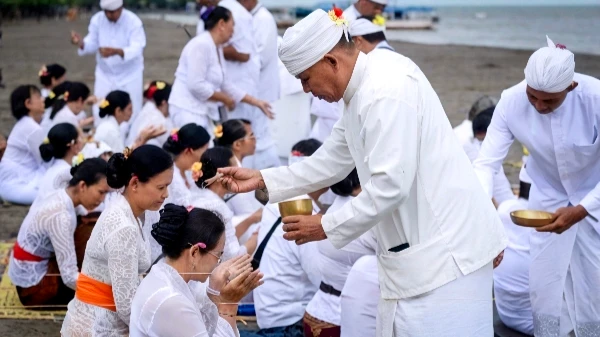
To truly understand Bali, we need to start with a simple question. What exactly is Balinese Hinduism?
In its simplest form, Balinese Hinduism is a belief system that developed from a blend of Hindu teachings from India and long-standing local beliefs of the Balinese people. These local traditions include reverence for ancestral spirits, respect for natural forces, and the idea that spiritual energy exists in every aspect of life.
However, calling it simply a “religion” often falls short of capturing its full meaning.
Balinese Hinduism is not only about the relationship between humans and the divine, but also about how people live in harmony with one another and with nature. These values are not just taught. They are practiced daily through real, tangible actions.
This is what makes Balinese Hinduism feel different.
It is not limited to places of worship or specific moments in time. You do not only practice it during ceremonies. Instead, daily life itself becomes a form of spiritual practice.
From making daily offerings in the morning, to showing respect in social interactions, to maintaining balance with the surrounding environment, everything is an expression of this belief system.
To understand how all of this works, we need to look at its core foundation, which shapes both the philosophy and the practices of Balinese Hinduism.
The Core Foundation: Tri Kerangka Dasar of Balinese Hinduism
To truly understand how Balinese Hinduism is lived in daily life, we need to look at its core foundation, known as the The Core Foundation.
These three pillars are not just abstract concepts. They form a system that shapes how Balinese people think, behave, and live their lives every day. Each element is deeply connected and cannot be separated from the others.
1. Tattwa: The Philosophy That Shapes the Way of Life
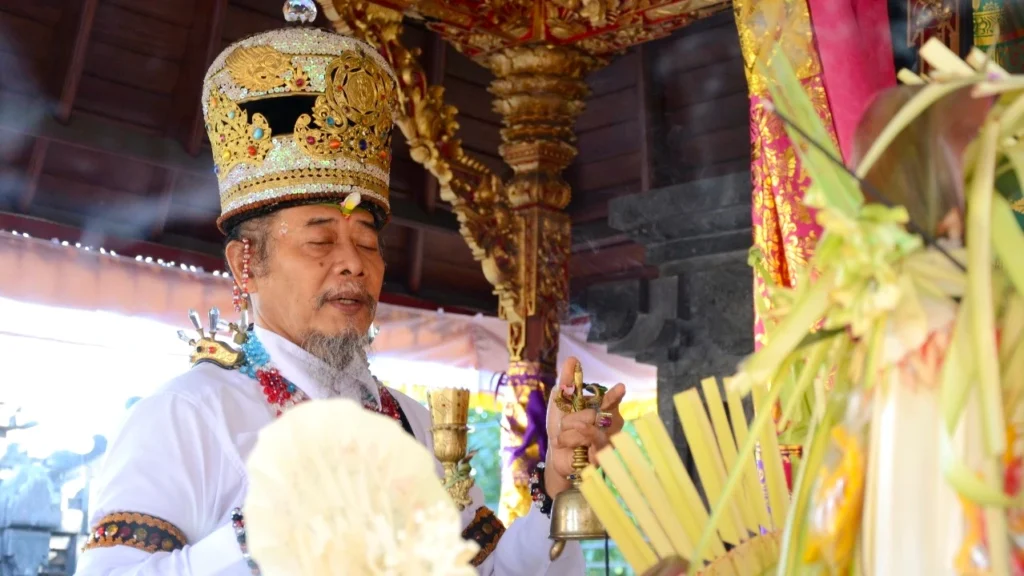
Tattwa represents the philosophical foundation of Balinese Hinduism. It addresses fundamental questions about life such as who we are, where we come from, and what our purpose is.
Within Tattwa, there are key concepts such as karma, the law of cause and effect, which teaches that every action carries consequences. There is also the concept of samsara, or the cycle of rebirth, which reflects the idea that life does not end in a single lifetime.
Another important aspect is the understanding of balance between positive and negative forces that exist in the universe. These forces are not always seen as purely good or bad, but as elements that must coexist to maintain harmony.
For the Balinese, Tattwa is not just something to believe in. It is a way of understanding the world. It influences how people make decisions, face challenges, and interpret the events in their lives.
2. Susila: Ethics That Maintain Social Harmony
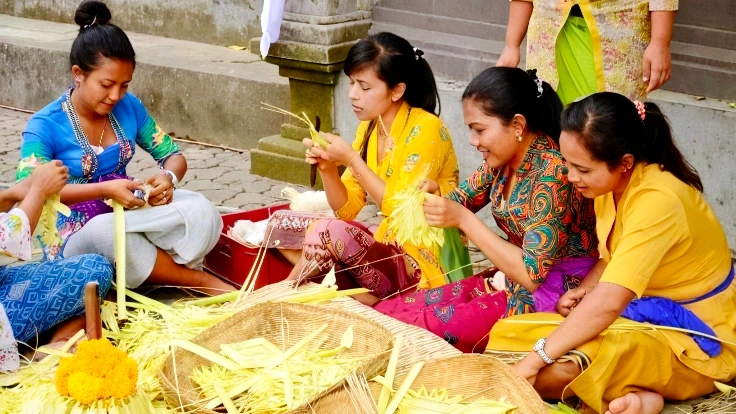
If Tattwa is the foundation of belief, then Susila is how those beliefs are expressed through behavior.
Susila governs how individuals should act in their daily lives. It shapes relationships with others, with the environment, and even with oneself.
The central value of Susila is harmony. This is reflected in respectful behavior, polite communication, and an awareness of one’s role within the community. In Balinese culture, how you behave often carries more weight than what you say.
This can be seen in simple, everyday actions. Dressing appropriately when entering a temple is not just about following rules, but about showing respect. Being mindful not to step on offerings placed on the ground reflects awareness and consideration for the spiritual practices of others.
Susila ensures that spiritual values do not remain as abstract ideas, but are consistently reflected in real-life interactions.
3. Yadnya: The Living Expression of Spiritual Practice
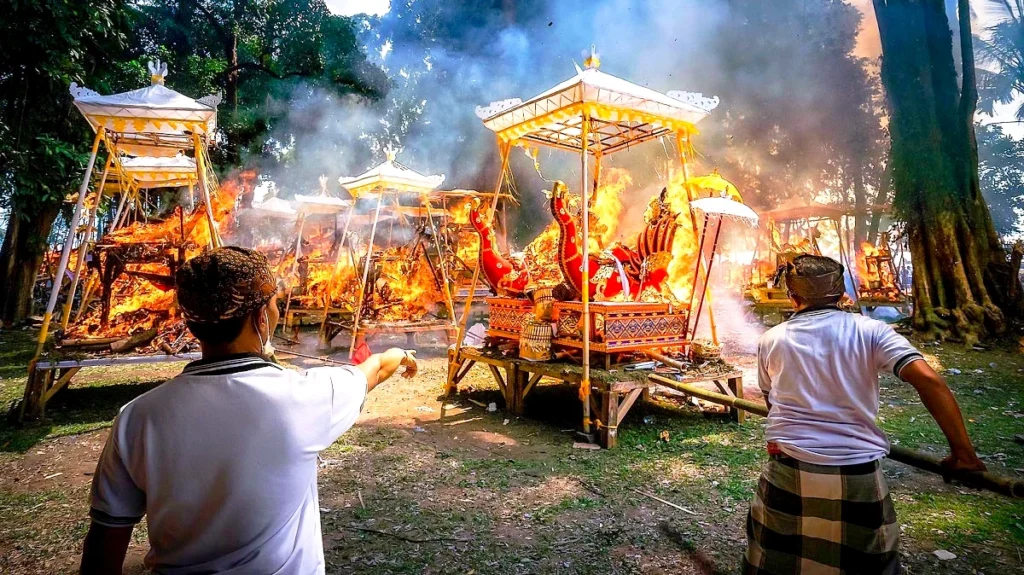
Yadnya, often expressed through ceremonies and rituals, is the most visible aspect of Balinese Hinduism and often the first thing that captures the attention of visitors.
Yet behind its visual beauty lies a deeper meaning.
Yadnya can be understood as an act of sincere offering or sacrifice. It is not about giving something grand, but about the intention and awareness behind the act.
Take canang sari, for example. These small daily offerings may appear simple, but the process of making them is itself a form of spiritual practice. It involves focus, mindfulness, and gratitude in every step.
Beyond daily offerings, there are also larger ceremonies that mark important stages of life. From birth and coming of age to marriage and death, each phase is accompanied by rituals that carry symbolic and spiritual significance.
What is important to understand is that these rituals are not merely inherited traditions or cultural performances. They are a way for the Balinese to maintain a connection with the divine, with their ancestors, and with the natural world.
These three elements work together as a complete system.
Tattwa provides understanding, Susila guides behavior, and Yadnya becomes the visible expression of both. Together, they form a way of life that is not only believed, but actively lived every single day.
Why Are Offerings Everywhere in Bali?
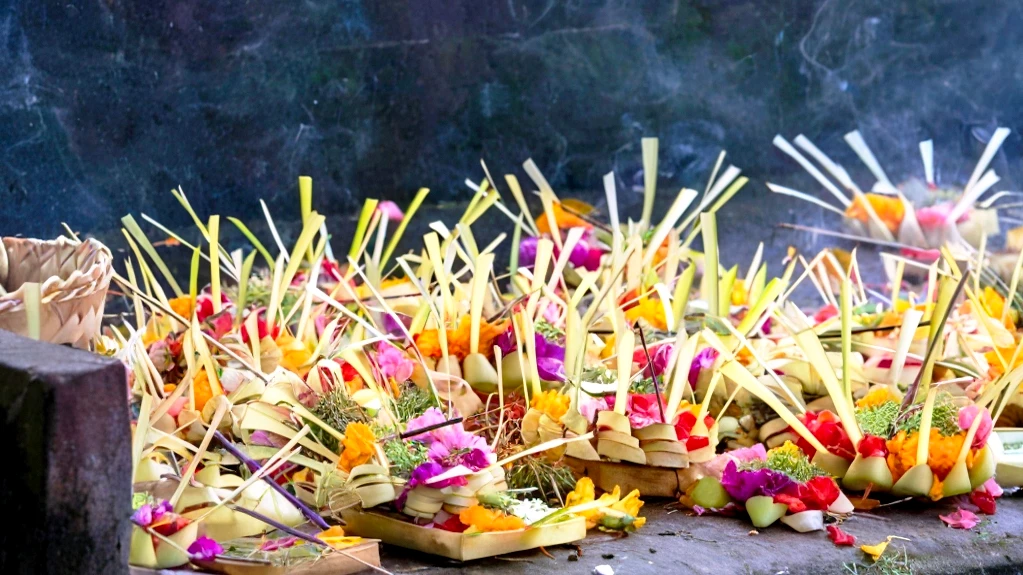
One of the first things that often catches visitors’ attention when arriving in Bali is the presence of small offerings that seem to be everywhere.
You may notice them on sidewalks, in front of shops, at the entrance of hotels, and even on vehicles. For some, they may look like simple decorations. For others, they can feel confusing or even mysterious.
For the Balinese, however, this is a completely natural part of daily life.
These offerings, known as canang sari, are a simple expression of gratitude and respect. Every element within them carries symbolic meaning, from the flowers and leaves to the incense that is burned.
More than just physical objects, offerings are a way to maintain balance between humans, nature, and unseen forces. They serve as a daily reminder that life is not only about physical activities, but also about spiritual awareness.
What makes this practice unique is that it is not limited to temples or sacred spaces. You will find offerings in public areas, workplaces, and private homes. This reflects how spirituality in Balinese Hinduism is fully integrated into everyday life.
It is also important to understand that these offerings are not something mystical or frightening, as they are sometimes misunderstood. They are not about superstition, but about intention, balance, and respect.
Religion as Daily Life, Not Just Worship
For many people, religion is often understood as something practiced at specific times and in specific places, such as attending a place of worship, participating in weekly rituals, or celebrating religious holidays.
In Bali, this understanding feels very different.
Balinese Hinduism is not separated from daily life. There is no clear boundary between what is considered a spiritual activity and what is seen as an ordinary one. Both exist side by side and are deeply interconnected.
For the Balinese, working is not only about making a living, but also a form of responsibility and devotion. Preparing daily offerings is not just a routine, but a form of mindful practice. Even everyday social interactions carry spiritual meaning.
Every action, no matter how small, can hold significance.
This is what makes life in Bali feel unique. Spirituality is not confined to temples or large ceremonies. It lives within daily rhythms, habits, attitudes, and the way people perceive life itself.
When you begin to see Bali from this perspective, you realize that what exists here is more than religious practice. It is a complete way of life that is naturally integrated with culture and environment.
The Concept of Harmony: The Heart of Life in Bali
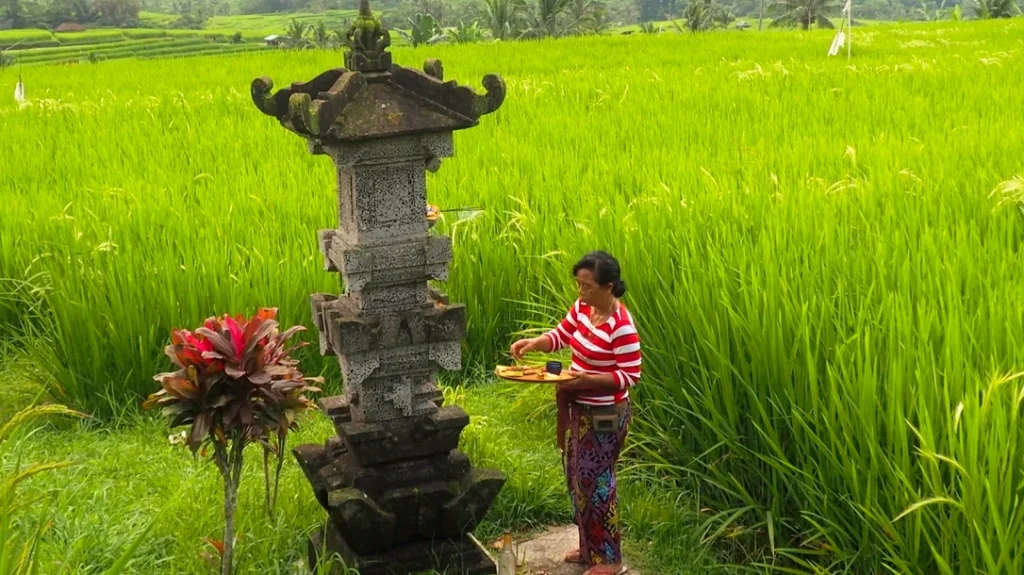
If there is one concept that best represents life in Bali, it is harmony.
Harmony is not just a value. It is a guiding principle that influences almost every aspect of Balinese life. The way people think, act, and interact with their surroundings is deeply rooted in maintaining balance.
One of the most well-known concepts that explains this is Tri Hita Karana.
In simple terms, Tri Hita Karana means “the three causes of well-being.” It teaches that true prosperity and happiness can only be achieved when humans maintain balance in three essential relationships:
- The Relationship with the Divine (Parahyangan)
This is reflected in daily offerings, prayers, and ceremonies performed as expressions of gratitude and devotion. These practices help maintain a spiritual connection in everyday life. - The Relationship with Other People (Pawongan)
This is seen in the strong sense of community, mutual respect, and cooperation within Balinese society. Social harmony is highly valued and actively maintained. - The Relationship with Nature (Palemahan)
Nature is not seen as separate from human life, but as an integral part of it. Caring for the environment is therefore not only a practical responsibility, but also a spiritual one. Many cultural practices in Bali are rooted in this principle.
What makes this concept truly powerful is how it is actively lived, not just understood.
You can see it in how Balinese people balance modern development with tradition, how they care for their environment, and how they preserve their cultural values in a changing world.
Seeing Bali Beyond the Surface
Bali is often known for its natural beauty, rich culture, and unique atmosphere. But what truly makes Bali different is not only what you see, but what lies beneath it.
Every offering, every ceremony, and every daily habit carries meaning rooted in a living belief system that continues to shape life on the island today.
Balinese Hinduism is not simply a religion practiced at certain times. It is a way of life that influences how people understand the world, maintain balance, and live with awareness.
Once you begin to understand this, the way you see Bali starts to change.
You no longer see temples as just tourist attractions or offerings as cultural decorations. You begin to recognize the relationships, meanings, and philosophies that bring everything to life.
And at that point, your experience in Bali becomes more than just a trip.
It becomes something deeper, more meaningful, and far more memorable.